
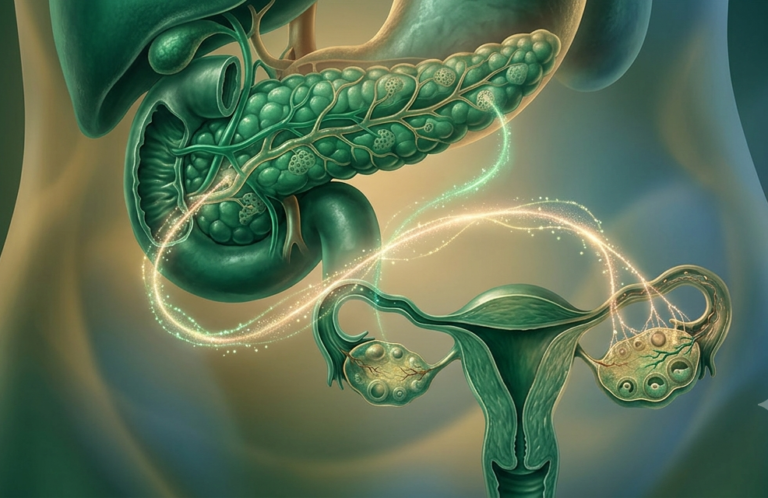

Your ovaries are listening to a conversation your blood sugar never stops having
Most women think about their ovaries when they think about fertility. Very few think about their pancreas. But these two are in a constant conversation, and what you eat is writing the script. Understanding this quiet exchange can shift the way you support your cycle, gently and from an unexpected place.
The Conversation You Did Not Know Was Happening
Your pancreas manages blood sugar by releasing a hormone called insulin. Every time you eat, insulin is released to clear sugar from your bloodstream and deliver energy to your cells. This is a normal, healthy process. But the rhythm of it matters, and that rhythm is shaped, meal by meal, by what and how you choose to eat.
When The Conversation Turns
The difficulty begins when blood sugar spikes too high or drops too low too often. When insulin surges repeatedly, it can signal the ovaries to produce more testosterone rather than oestrogen. In the female body, excess testosterone disrupts the hormonal balance that makes ovulation possible. Irregular cycles, delayed ovulation, and conditions like polycystic ovary syndrome are all linked to this pattern. The conversation between blood sugar and the ovaries, when it turns, can quietly affect the whole cycle.
Bringing Order To The Plate
The encouraging news is that blood sugar is one of the most responsive systems in the body. Small, consistent changes make a measurable difference. One simple shift is to eat your vegetables and protein first, and to save your carbohydrates for last. This helps blunt the sharp rises and falls in blood sugar, steadying the conversation. Done consistently, this gentle order on your plate becomes order in your hormones.
Science Says
The pancreas releases insulin to regulate blood sugar, and repeated large blood sugar spikes can lead to high insulin levels. Elevated insulin can stimulate the ovaries to produce more androgens such as testosterone, which can disrupt ovulation and is a key mechanism in polycystic ovary syndrome. Eating fibre and protein before carbohydrates is shown to reduce the size of blood sugar spikes after meals, supporting more stable insulin and hormonal balance.
Scripture Says
“Let all things be done decently and in order.” (1 Corinthians 14:40).
Just as scripture calls for order, bringing order to your plate steadies blood sugar and insulin, which in turn helps keep the conversation between your pancreas and ovaries balanced, creating the orderly hormonal conditions your reproductive system needs.
When you bring order to your nutrition, you create order in your hormones.

The smooth green flow of balanced blood sugar rising above the sharp red spikes and crashes
Declaration
My blood sugar is stable, my insulin is balanced, and the conversation between my pancreas and my ovaries is steady and whole. My hormones are in order, and my reproductive system is thriving.
Amen
There is real hope in knowing that something as responsive as your blood sugar is listening, and that small daily choices can steady it. You do not need to overhaul everything at once. Order built gently, one meal at a time, season after season, speaks peace into the conversation your body is always having. Begin with one simple shift today, and if these words brought clarity, share them with a woman whose cycle needs more order than medicine.

Melody TiOluwa Adesina
Founder, TVRH
Melody is the visionary behind The Virtuous Repro Health Mission, committed to equipping women with faith-grounded reproductive health knowledge. She writes to help every woman understand her body as a place of divine design, not confusion.